How to Split Test Ad Creative Across Multiple Networks Without Wasting Budget
Most paid-ads advice treats split testing as a single-platform exercise: run variant A against variant B on Meta, pick the winner, move on. But if you’re running campaigns on two, three, or more networks simultaneously — which almost every serious DTC or ecommerce brand is — that approach leaves money on the table and produces conclusions you can’t fully trust.
This article walks through how to structure creative split tests when you’re advertising across multiple networks at once, so you get actionable results faster without torching budget on inconclusive experiments.
Why Multi-Network Creative Testing Is Different
Testing ad creative on a single platform is already tricky. Add a second or third network and two new problems appear immediately.
The same creative doesn’t behave the same way across platforms. A direct-response video that dominates on TikTok might completely flop on Pinterest, not because the creative is bad, but because the audience context, feed behavior, and viewing intent are entirely different. If you run the same test across both channels at the same time without isolating variables, you’ll struggle to know whether a result reflects the creative quality or the platform environment.
Budget is thin and learning takes money. Every split test requires enough impressions and conversions to reach statistical significance. When you divide a limited budget across multiple networks AND multiple creative variants, each cell in your experiment gets fewer data points. Tests run longer, results arrive later, and you’re paying for that delay in real ad spend.
The solution isn’t to test less. It’s to test smarter.
Step 1: Decide What You’re Actually Testing
Before you touch a campaign, write down the single variable you’re testing. Not “which ad is better” — that’s too vague. The question should be specific:
- Does a lifestyle image outperform a product-only image for this audience?
- Does leading with the discount versus leading with the benefit change click-through rate?
- Does a 15-second video outperform a 30-second video for cold traffic?
One variable per test. Everything else — audience, bid strategy, landing page, offer — stays identical between variants. This sounds obvious but it breaks down constantly in practice, especially when creative teams make “small tweaks” to the copy while also swapping the visual.
If you’re using an AI creative generation tool (AdPlus has one built in), it’s worth generating both variants in the same session using the same brief, then changing only the one element you’re testing. That keeps production decisions consistent.
Step 2: Choose Whether to Test In-Network or Cross-Network
This is the fork in the road that most guides skip.
In-Network Testing (One Platform at a Time)
For most SMBs and DTC brands, in-network testing is the right default when budgets are limited. Run your creative split test on the platform that drives your highest volume first — usually Meta or Google. Once you have a clear winner (more on what “clear” means below), you then take that winning creative and launch it across your other networks.
This approach is slower for exploring new channels, but it gives you cleaner data and doesn’t dilute your budget across too many simultaneous experiments.
Cross-Network Testing (Parallel Testing)
Sometimes you genuinely need to know how the same creative performs on two different platforms — not which creative wins within one platform. This matters when:
- You’re deciding whether to invest more budget in a new channel
- You’re trying to understand which platform your audience is most responsive on
- You have enough volume that you can fund both tests simultaneously without starving either
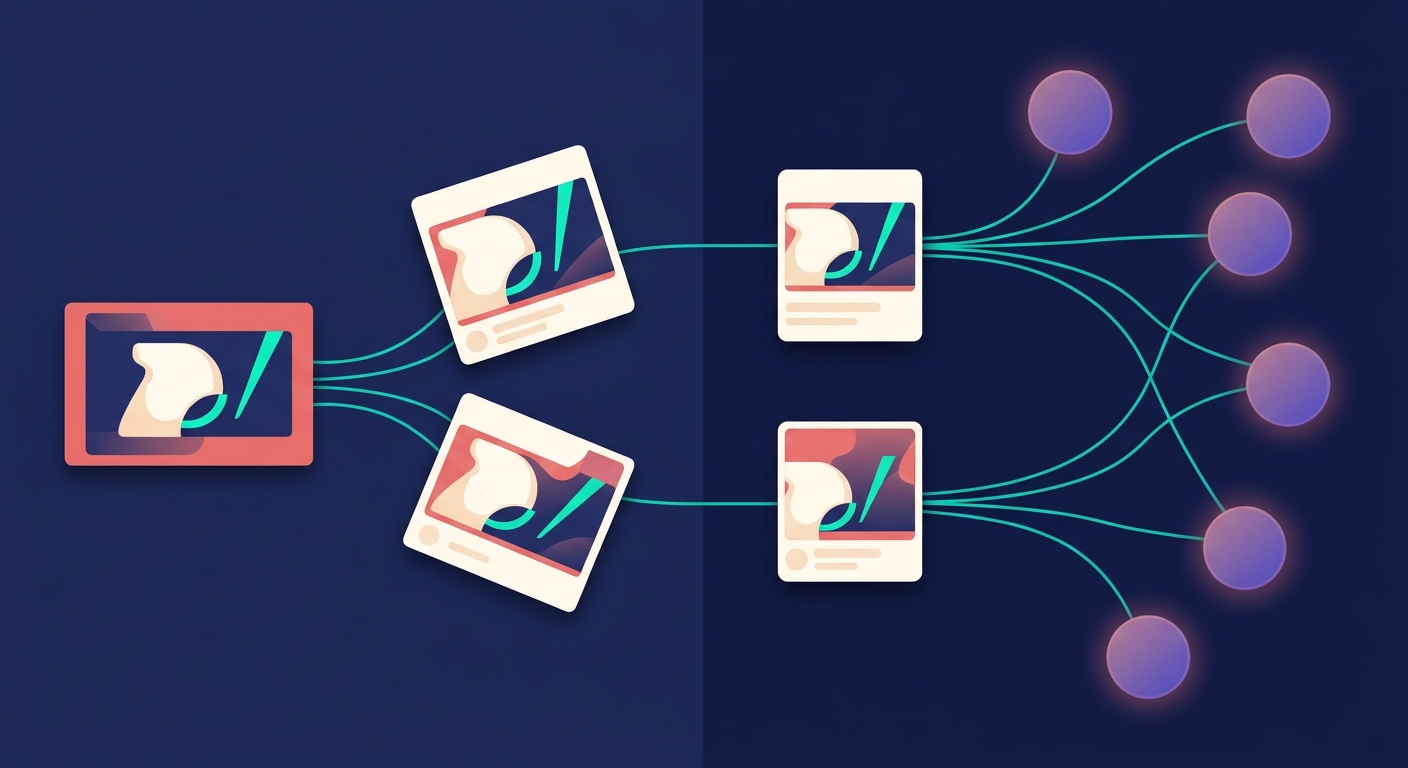
For parallel cross-network tests, treat each platform as its own controlled experiment. Don’t compare the raw performance numbers directly across platforms — a 2% CTR on Google Search and a 2% CTR on TikTok mean completely different things. Instead, compare the relative lift between variant A and variant B within each platform. If variant B beats variant A by a meaningful margin on both Meta and TikTok, you have a durable creative insight. If the results flip between networks, the platform context is doing the heavy lifting, not the creative itself.
Tired of juggling 12 ad network dashboards?
AdPlus plans, launches, and monitors campaigns across Google, Meta, LinkedIn, TikTok, and 8 more networks — from one chat. Free Starter tier.
Get started →Step 3: Set a Minimum Budget Per Test Cell
There’s no universal number, but here’s the practical framing: each variant needs enough spend to generate a meaningful number of the outcome you care about. If you’re optimizing for purchases and your conversion rate is low, you need more spend per variant than if you’re optimizing for clicks.
A common mistake is running a split test for three days on a $20/day budget split between two variants on two networks — that’s $5 per variant per network per day. You’ll never get enough signal to decide anything. At that point, you’re not testing, you’re just running ads.
If you can’t afford to fund a test properly, run it on one network only until you have a winner, then scale that winner to other channels.
Step 4: Manage the Test in One Place
One of the hidden costs of multi-network creative testing is the operational overhead. You’re logging into separate platforms, pulling separate reports, and trying to reconcile data from dashboards that don’t share definitions. Meta’s “click” and Google’s “click” aren’t the same thing. TikTok’s attribution window defaults differ from Microsoft’s.
This is exactly the kind of friction that causes marketers to either stop testing or make decisions on incomplete data. Having a single dashboard that surfaces campaign performance across networks — with consistent labeling and date ranges — makes it dramatically easier to spot when a test has run long enough and which variant is trending toward a win.
In AdPlus, you can monitor campaigns across all your connected networks side by side, which removes the tab-switching and copy-paste work that tends to introduce errors into cross-network reporting.
Step 5: Know When to Call the Test
Stopping a test too early is the most common and costly mistake in creative testing. A variant that looks like a winner after two days often regresses once the algorithm’s initial exploration phase settles.
Practical guidance:
- Don’t call a winner based on a small number of conversions. The fewer conversions you’ve seen, the higher the chance the gap between variants is noise.
- Let the test run through at least one full week to account for day-of-week variation in buyer behavior.
- Look for a consistent directional gap, not just a single metric. If variant B has a higher CTR, lower CPC, and better conversion rate, that’s a more trustworthy signal than one metric being slightly up while another is flat.
- Don’t pause the losing variant too early — some “losers” on cold traffic turn into winners on retargeting audiences.
Once you do call a winner, document what the winning element was, not just which ad ID performed better. That insight — “direct benefit headlines outperform curiosity headlines for this product category” — is what compounds over time and makes future tests faster.
A Simple Testing Cadence for Small Teams
If you’re a small team or a solo operator, you don’t need a complex testing framework. A rotation that works for most brands:
- One active creative test per platform, per month. More than that and you’ll have too many inconclusive experiments running at once.
- Winner becomes your control. Every new test is a challenger to the current best-performing creative.
- New test every four to six weeks. This gives you enough time to gather data and implement the winner before the market changes.
- Keep a running log. A simple document tracking what you tested, what won, and what you learned is worth more than any creative brief template.
The Payoff of Testing Discipline
Structured creative testing across multiple networks is one of the highest-leverage things a small paid-ads team can do. Each test either confirms what’s working or surfaces a better option — and that knowledge stacks. After six months of disciplined testing, you’ll have a playbook of creative principles that reflects how your specific audience responds, across the specific platforms where they spend time. That’s something no competitor intelligence tool, no AI, and no agency can hand you — it has to be earned through methodical iteration.
If you’re managing campaigns across two or more ad networks and want to stop making decisions in spreadsheets, AdPlus gives you a single place to plan, launch, and monitor your tests across all your channels — so more of your time goes into acting on insights, not gathering them. Try it free and see how much cleaner your testing workflow can get.